Projects
A collection of projects spanning mechanical design, robotics and electronics, built in classrooms, workshops and spare time.
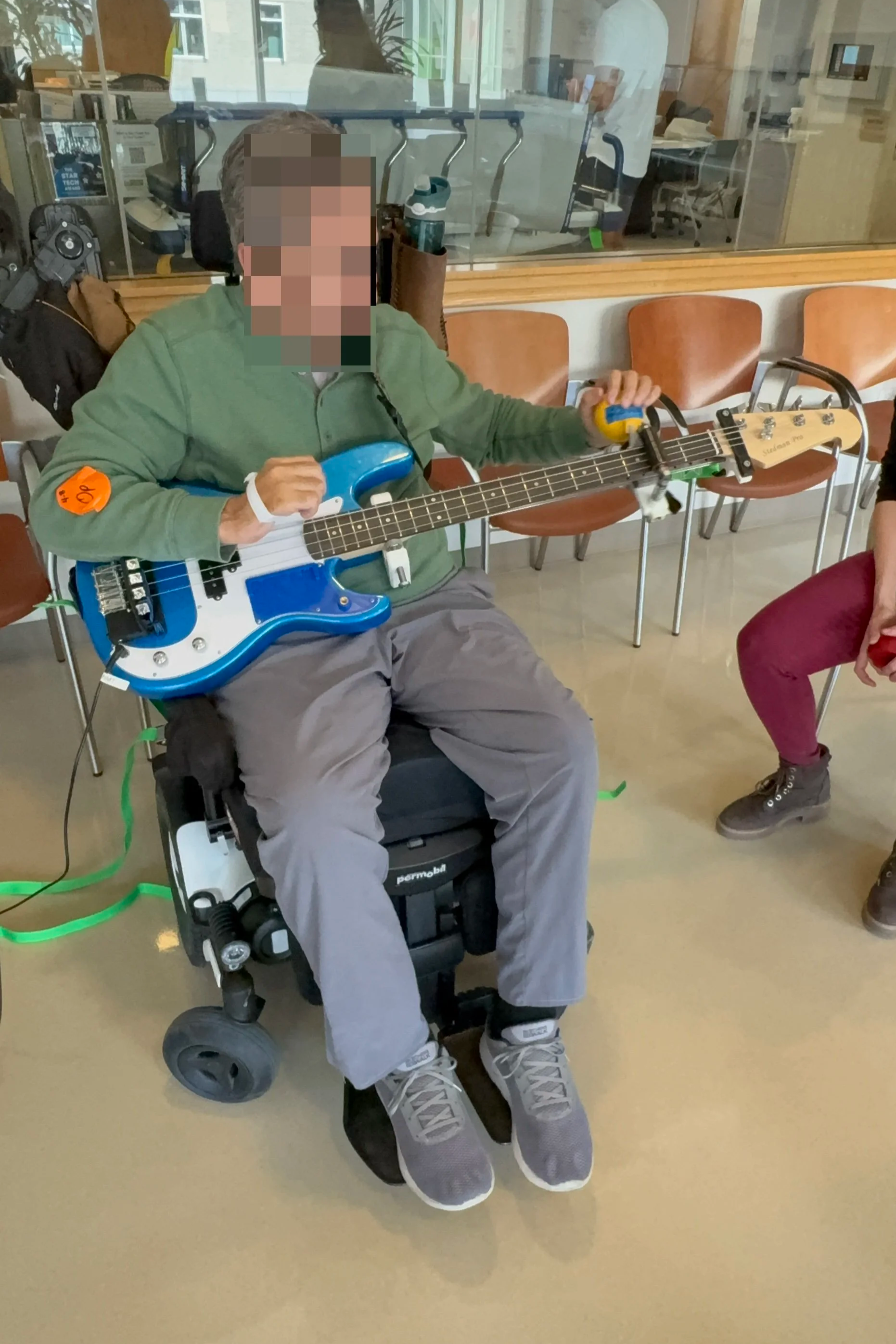
Photo showing a test session with a user to improve the general system design
Bass Guitar Adaptation
Colorado School of Mines • Human Centered Design Studio
Music is one of the most universal human experiences, but the instruments we use to make it aren’t always designed that way. This project, developed in partnership with Craig Hospital and the River Deep Foundation, set out to make the bass guitar accessible to individuals with limited hand dexterity or strength.
I led the lever subsystem which was the core mechanical interface that allows a player to fret notes without requiring the grip strength a standard bass normally demands. This meant designing, modeling and iterating on a mechanism that had to be both functionally precise and physically comfortable for users with varying limitations. I also produced the complete SolidWorks assembly for the full system and used SolidWorks Composer to create an instruction manual, this way the product could begin the process of manufacturing.
Seeing the project in use gave me a glimpse into the positive impact that engineering can have, allowing people to be immersed in a previously out of reach experience.
Skills
SolidWorks • Mechanical Design • Human-centered Design • User Testing • FEA • GD&T
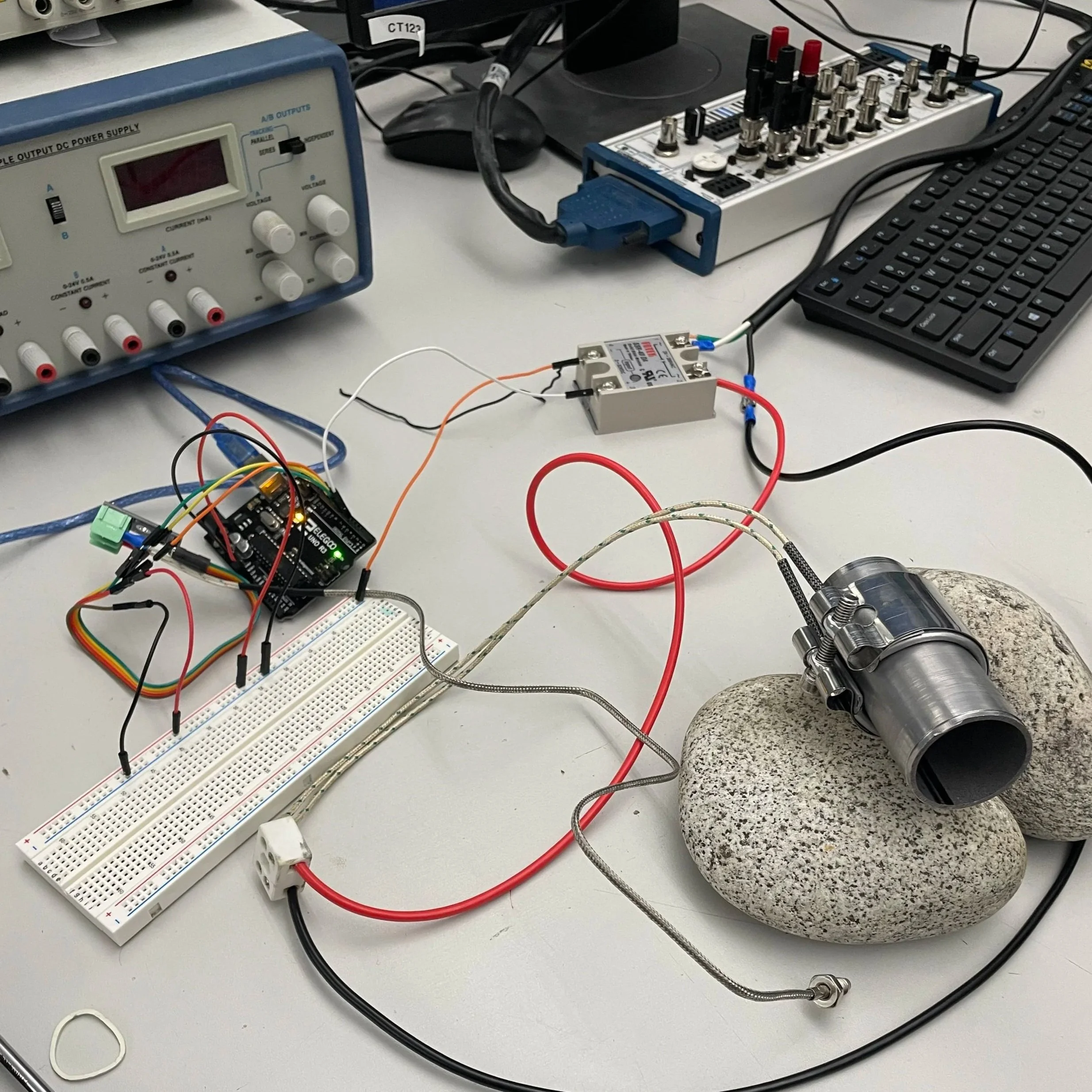
Photo showing testing of the heating element before placing on full assembly
Pneumatic Injection Molder
Colorado School of Mines
For this class project our team was tasked with designing a component of a plastic recycling line, specifically targeting PLA from 3D printing waste. We chose to create an injection molder, designing and constructing a fully functional pneumatic system capable of producing small molded plastic parts. Our test design mold was a bust of Dwayne “The Rock” Johnson’s head as a test for fine detail using this system.
During this project I was the electronics lead and used a PID control system to keep the heating element at the proper temperature. Also a simple LED color system was developed to visually display whether the heating element was at the necessary temperature and if the plastic was ready to be pressed into the mold.
Working with pneumatic actuation, mold design and thermal control gave me additional intuition when approaching part design. Understanding the manufacturing process allows for a smoother transition between design and full scale production.
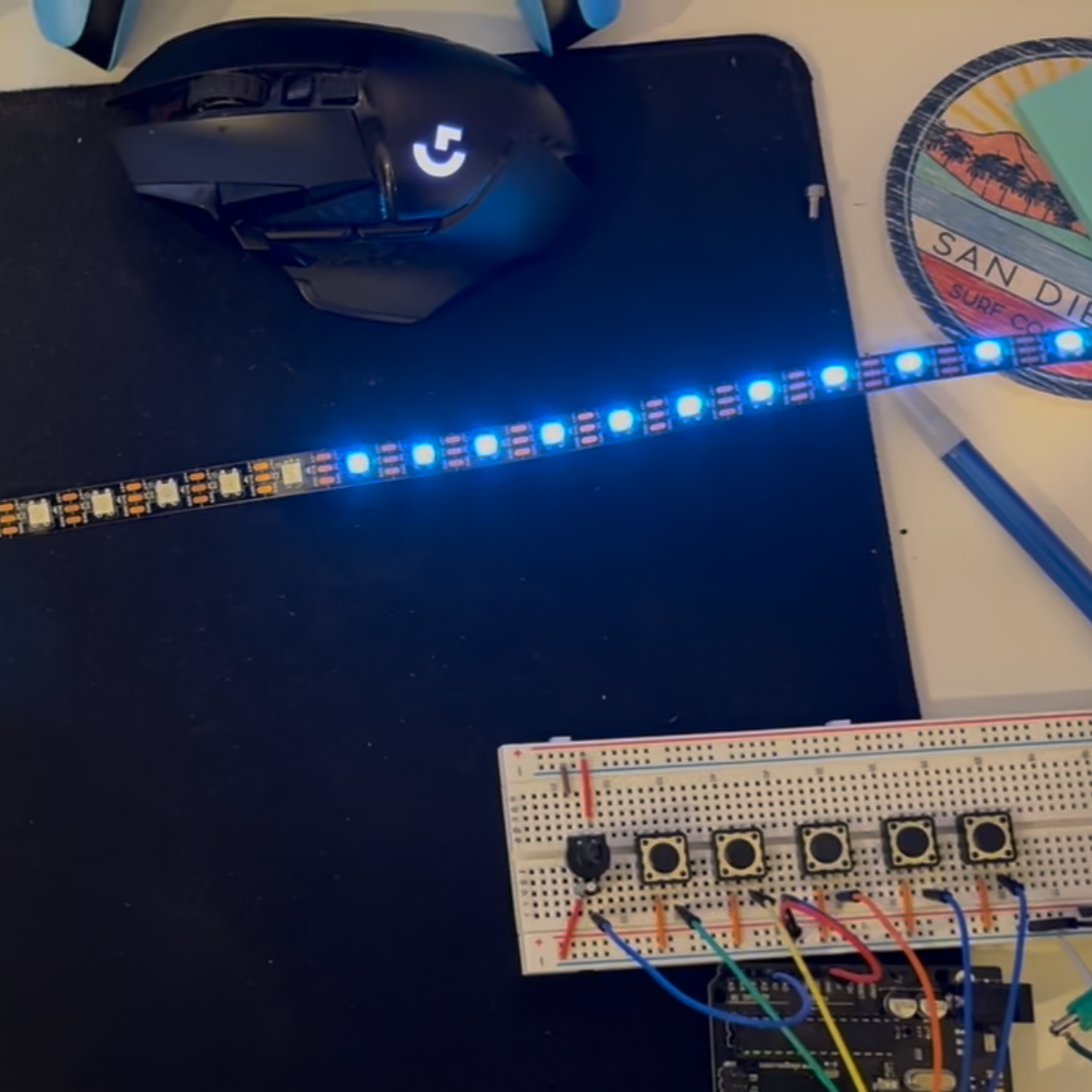
Photo displaying board and strip from test, currently displayed is number of pixels lit controlled by potentiometer
Freelance CAD & Wearable Lighting System
Freelance Work
Two independent contracts covering opposite ends of my skillset. Precision mechanical CAD and electronics prototyping.
The first was a CAD translation project which took an existing SketchUp design and rebuilt it at proper size in SolidWorks to produce a STEP file ready for CNC manufacturing. This worked with clean geometry and the client wanted to test out how small some of the tolerancing could be as the final design is for a high end cabinet handle.
The second is an ongoing wearable lighting project. The goal is a wearable lighting system where environmental sensors drive what the lights do, allowing the wearer to feel responsive to the space around them. The first contract milestone was a working proof of concept of a light strip with different animations that can change based on the data from a variety of sensors. The next phase, focused on wearability and interactions in a specific environment and case, picks back up later this year.
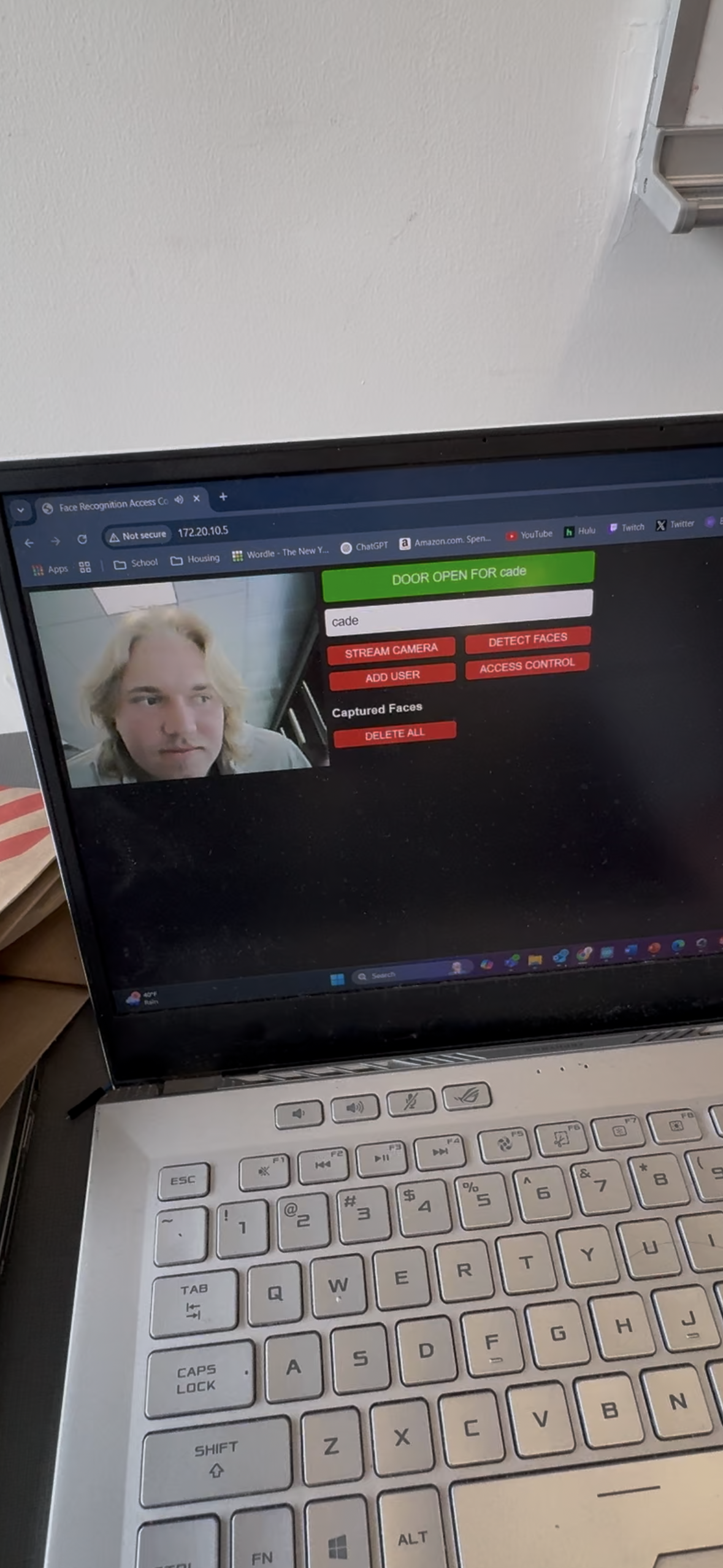
Camera server interface showing a recognized user, therefore system will not activate
Face Tracking Alarm System
Colorado School of Mines • Robotics Lab
For this class project the prompt was to create a system that could either function in home defense or home alarming. Our team’s answer was a motorized, face-tracking turret that uses an ESP32-CAM module to identify registered faces and make a shoot/no-shoot decision in real time. This way the turret would only be active when an unrecognized face was seen.
I drove most of the technical work, building the facial recognition pipeline, programming the servo response, and integrating everything onto the existing vehicle chassis.
A v2 of this project would lean further into the alarm concept with the same facial recognition core, but replacing the turret with a reactive light or sound effect. It’s a concept I would love to revisit with better hardware and extended time to focus on the tracking system itself.
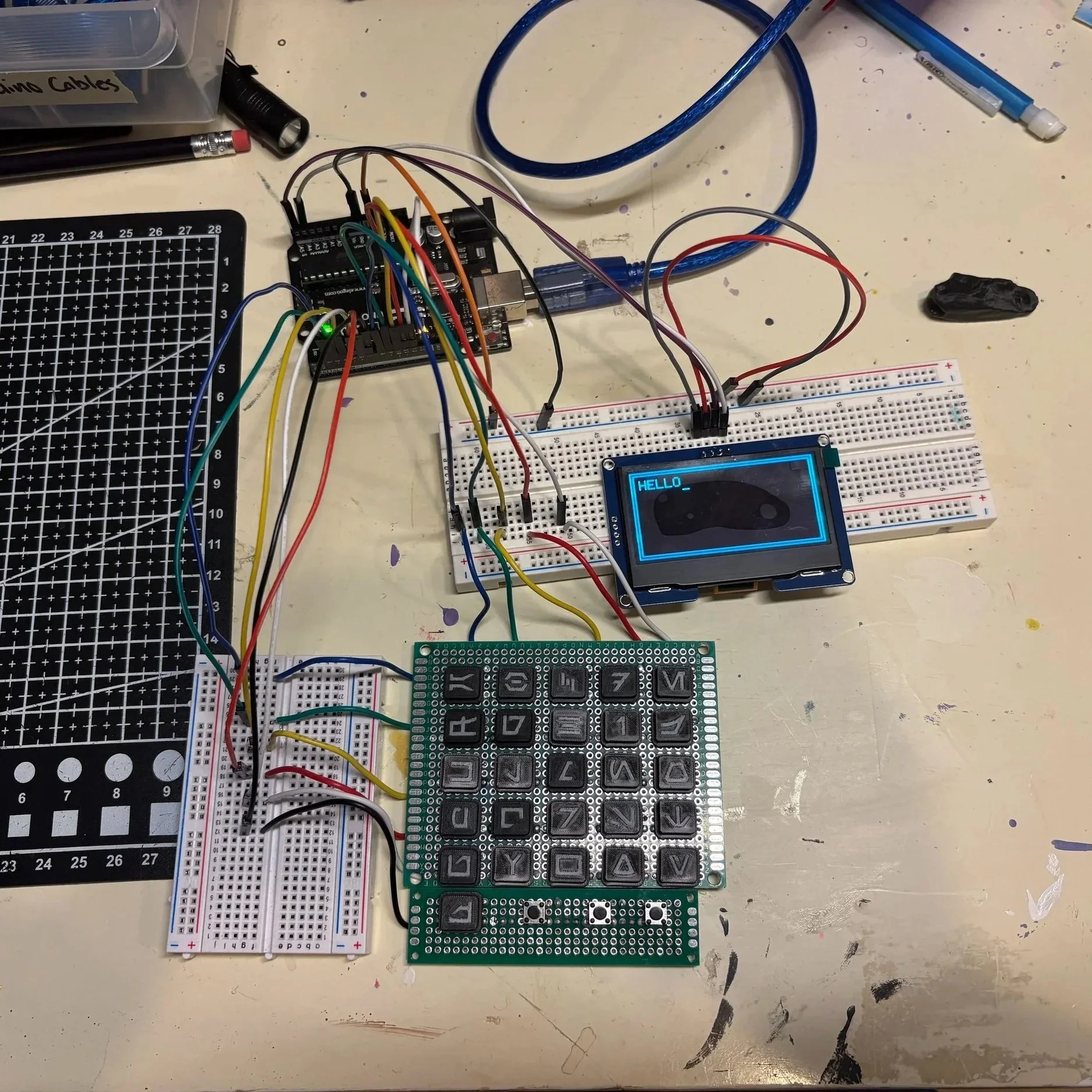
Photo displaying screen after the word hello was typed using the displayed keycaps
Aurebesh Translator (In Progress)
Personal Project
Galaxy’s Edge at Disneyland is covered in Aurebesh, the most common written language of Star Wars. It’s on everything you see when you look around, but unless you’ve memorized the alphabet or have your phone out, you can’t read any of it.
This led to the development of the Aurebesh Translator which is a handheld input device built around a custom button matrix to allow the use of the number of buttons exceeding the Arduino Uno pin number. Instead of English characters on the keycaps, each key is labeled with its Aurebesh equivalent. Press a character, and the screen displays the English letter. The end result is a tactile, standalone decoder that can fit in the world it was designed for, without feeling like I am breaking my immersion by opening an app.
The electronics and translation logic are complete and functional, the next phase is the enclosure. The design will be 3D printed to appear like something a resident of Batuu might have in their pocket and feel in universe.
Skills
SolidWorks • PID Control • Pneumatic Systems • Mechanical Design • Fabrication • Manufacturing
Skills
SolidWorks • Electronics • Arduino • LED Systems • CNC
Skills
ESP32 • Facial Recognition • C++ • Robotics • Embedded Systems • Mechanical Integration
Skills
Electronics • Arduino • 3D Printing • SolidWorks • Prop Design • C++